
Forensic Structural Assessment Of Recurring Ceiling Cracks
Case Study: Falls Church, VA | 2025
Service Type: Structural Evaluation • Forensic Engineering Consulting
When a homeowner noticed ceiling cracks returning months after repairs, they weren’t just concerned about appearance – they needed answers. ZoDen Engineers was brought in to provide a forensic engineering evaluation that could help them move forward with a warranty claim and understand what was actually happening inside their home’s structure.
The Homeowner’s Concern
Cracks first appeared in early 2024 across several second-floor rooms. After the builder patched and painted the areas later that spring, everything seemed resolved – until the cracks reemerged in early 2025.
At that point, the homeowner decided to submit a warranty claim. The warranty provider requested a structural report, and that’s when ZoDen stepped in to help.


What We Evaluated
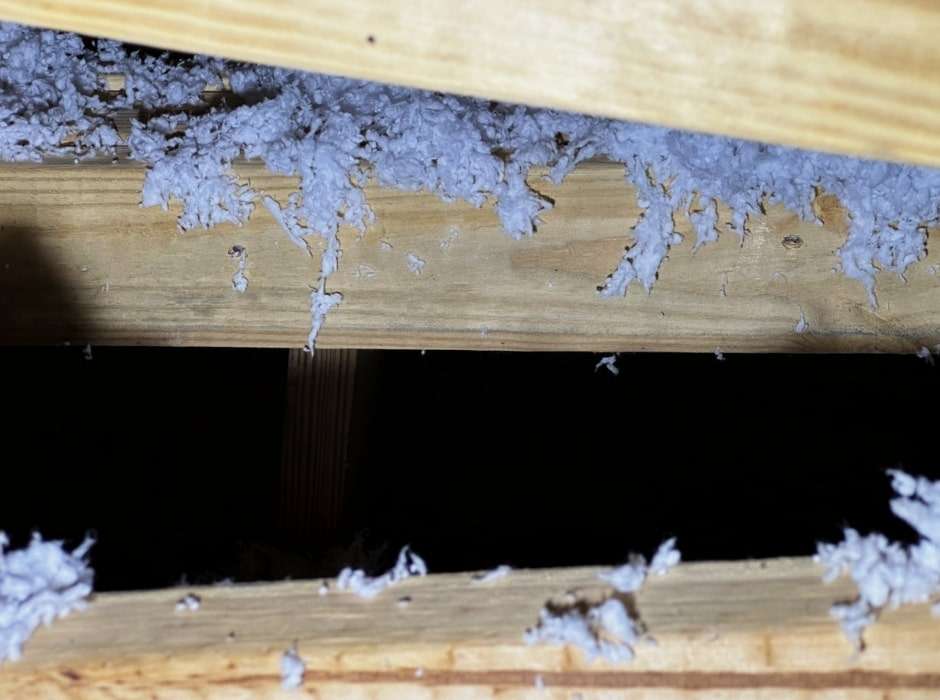
ZoDen conducted a thorough visual assessment of the home’s accessible structural components, concentrating on the areas above the cracked ceilings. This included reviewing the attic framing and roof-truss conditions, studying the homeowner’s original photographs of the damage, evaluating the relevant structural design information and construction documents, and considering any on-site activity – such as HVAC use, attic access, or electrical work – that could have influenced the framing. This approach aligns with ZoDen’s forensic engineering process, which focuses on identifying underlying causes rather than surface-level symptoms.
What We Found
After comparing the truss drawings with actual field conditions, a pattern became clear:
The girder trusses – which should have been built as a four-ply assembly – were not fully nailed together according to manufacturer specifications. Because the plies weren’t properly connected, the loads weren’t shared evenly. Some truss plies were taking significantly more load than intended.
Over time, that uneven stress led to excessive deflection, which caused the ceiling cracks to appear and reappear.
This was not normal settling, HVAC vibration, or wear and tear. It was a correctable construction-phase fastening issue, uncovered through technical analysis and field experience.

How We Recommended Fixing It
The recommendations emphasized restoring proper load sharing within the affected trusses and improving overall structural performance. ZoDen outlined a corrective approach that included strengthening connections between truss components, applying fastening or reinforcement methods consistent with engineering requirements, ensuring the repairs aligned with the intent of the original design, and observing the ceiling areas after the work was complete to verify performance improvements. These measures, documented in the formal engineering report, provided a clear and technically sound path toward resolving the issue.
Why This Matters
Cases like this are a strong example of why homeowners, contractors, and warranty companies rely on ZoDen for forensic engineering consulting services. Small installation errors can create recurring cosmetic damage – and sometimes much larger structural issues. Our role is to investigate, clarify, and guide the repair process with accurate and unbiased engineering insight.
A Clear Path Forward
Through this evaluation, the homeowner received a complete explanation of the structural issue, along with well-documented support for their warranty claim and a concise repair plan detailing how to address the problem. The findings also offered reassurance that the issue was both identifiable and correctable, giving the homeowner the confidence needed to move forward, with ZoDen remaining available should additional concerns arise.
Ready to Take the Next Step?
Whether you’re interested in becoming a partner or just want to learn more, we’re here to help.
Reach out to our team to get started.